
Plans to begin for re-use of Mt Arthur and Macquarie coal mine sites
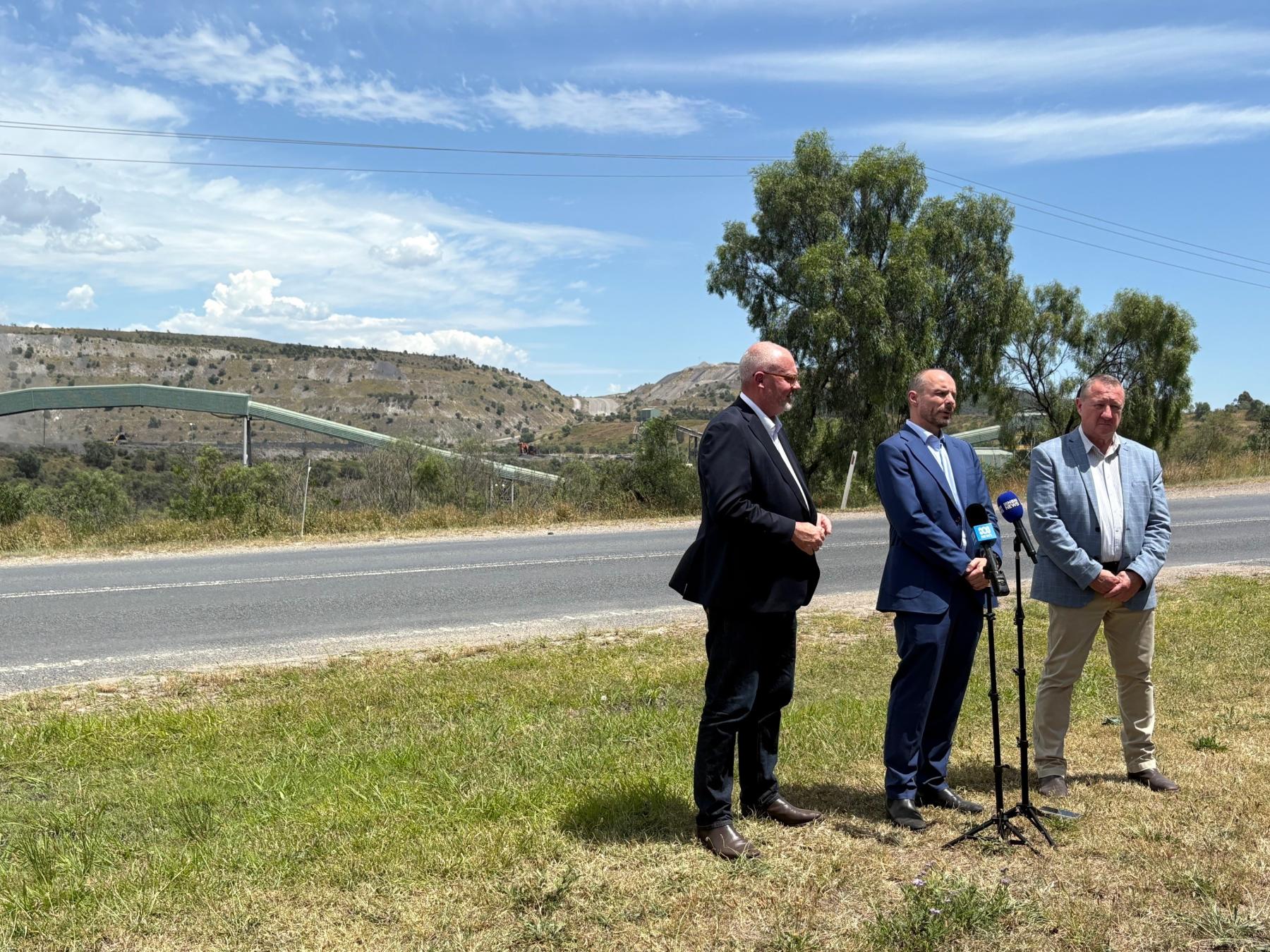
Supporting the Hunter region to prosper as it transitions to net zero has been further enabled by the announcement of a multimillion dollar funding agreement this week.
Master plans for BHP’s Mt Arthur mine site in Muswellbrook and Glencore’s Macquarie Coal site in Lake Macquarie will commence after an agreement was signed by the Australian and NSW Government and local councils.
Under the agreement, $5 million in Commonwealth funding, supported by contributions from NSW, will support the development of pilot master plans detailing how the land can be re-used.
Our CEO, David Shankey, joined Minister Tim Ayres and Muswellbrook Mayor, Jeff Drayton at the Mt Arthur mine site for the announcement.
With the planned closure of the Mt Arthur site in Muswellbrook in 2030, and the Macquarie Coal site no longer in operation, these master plans will deliver a vision for the future uses of the land and the economic opportunities that come with it. The plans will also outline any rezoning and infrastructure needed.
The Net Zero Economy Authority (the Authority) is supporting the project as part of our ongoing work in the Hunter region.
The Authority is working closely with the Muswellbrook Shire Council and Lake Macquarie City Council as well as the Australian and NSW Governments.
CEO David Shankey said, ‘Through practical partnerships and evidence-based planning, we are building new development pathways that will drive industry growth and support jobs in regions like the Hunter.’
The work will also lead to a recommendations report that will help guide future mine closures across NSW, demonstrating how the land can be re-used to the benefit of the community.
‘By working closely with NSW government, local councils and industry, we’re creating a model that can be replicated across Australia to deliver economic resilience and new opportunities in mining communities.’
For more information on our work in the Hunter, visit our Hunter page.