
Spotlight on Traralgon, Latrobe Region
From power generation to powering the transition
Set in the heart of Victoria’s Latrobe-Gippsland region, Traralgon has played a central role in Australia’s energy story. For generations, the town has supported coal-fired power stations, alongside strong agricultural, timber and paper-making industries, helping power homes and livelihoods across the state.
A town shaped by history
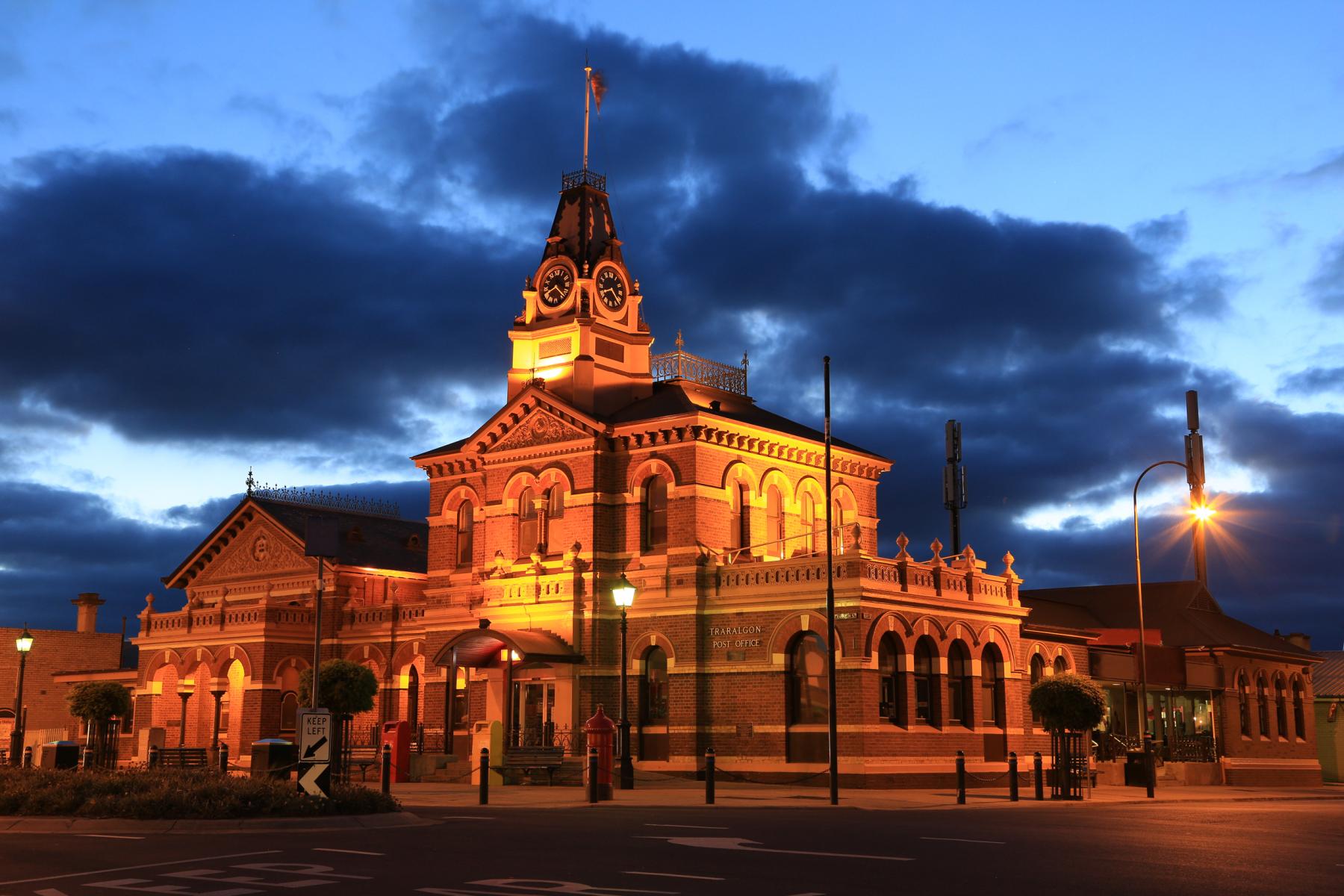
Traralgon’s streets reflect its layered past. Remnants of the gold rush era remain visible in heritage buildings, such as the Traralgon Post Office, Ryans Hotel and Ostler House. These buildings stand as markers of early growth and civic pride.
The Traralgon Post Office and Court House complex, built in 1886, remains one of the town’s most significant landmarks. Designed by architects John Thomas Kelleher and J. R. Brown of the Colonial Department of Public Works, the building is listed on both the Victorian Heritage Register and the Australian Commonwealth Heritage List. The complex serves as a reminder of Traralgon’s long-standing role as a regional centre.
Beyond its built history, Traralgon is known for blending industry with nature and lifestyle. The town has a vibrant arts scene, gourmet foods leveraging Gippsland’s fresh and local produce, major sporting events and community markets. It also has proximity to natural attractions like Tarra-Bulga National Park.
Powering the next chapter
As part of the Latrobe-Gippsland region, Traralgon is now central to one of Australia’s most significant energy transitions, moving from coal-fired power toward large-scale renewable energy.
Major projects proposed or underway in the region include:
- large-scale solar and battery storage, such as the proposed Yallourn Energy Security Precinct with storage capacity through a 350 MW, 4-hour, utility-scale batter project; and Hazelwood North Solar Farm, a 450-megawatt solar and battery facility planned for farmland between Traralgon and Morwell
- transmission infrastructure, including the Gippsland Renewable Energy Zone (G-REZ) project, which aims to connect new renewable generation to the national grid
- local government leadership, with Latrobe City Council installing solar on public buildings such as leisure centres and sports stadiums and setting ambitious targets for renewable energy and net zero emissions.
Together, these initiatives form part of a broader pipeline of investment in the region. This investment supports new industries, new skills and new jobs as the region transitions away from fossil fuels.
For communities like Traralgon, the energy transition is not just about infrastructure, it’s about people. The shift toward renewables represents a chance to build on the region’s deep energy expertise while supporting a transition that creates long-term economic opportunities and strengthens local resilience.
From powering Victoria’s past to helping shape its net zero future, Traralgon’s story is one of evolution. It's a story anchored in history, driven by community, and focused on what comes next.
Learn more about the region’s role in Australia’s net zero transition on our Latrobe-Gippsland region page.