
Meet MCi Carbon, turning industrial emissions into secure jobs in the Hunter
For regions like the Hunter, industries built on energy, manufacturing and exports have supported the local economy for generations. Now, as Australia moves towards cleaner energy production, new companies are developing in the region, offering innovative ways to reduce emissions and strengthen the local economy.
Meet MCi Carbon, a clean technology company scaling a promising decarbonisation solution in the Hunter called mineral carbonation. Instead of burying carbon dioxide (CO2) underground, MCi Carbon engineered a platform that transforms CO2 emissions and mineral-rich industrial waste into new materials. These materials can then be used in low-carbon concrete, sustainable building materials and other valuable products.
The company is a prime example of how the Hunter is evolving. They currently employ over 45 local workers to run their mineral carbonation platform, cementing the region’s capacity to transition towards sustainable new industries.
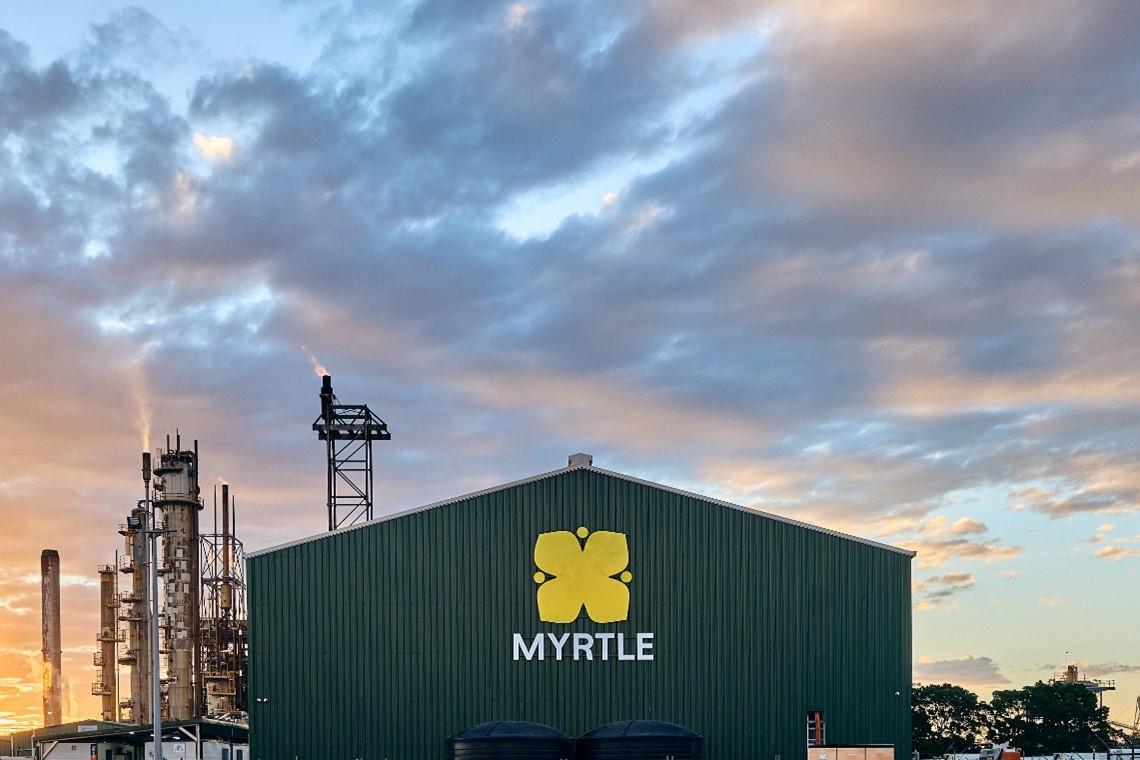
Myrtle Demonstration Plant on Kooragang Island, Newcastle, NSW - image supplied by MCi Carbon
Reimagining CO2 as a resource, not waste
Can carbon dioxide be transformed into something valuable? This ambitious question was the spark behind MCi Carbon forming in 2013. This was when the company secured its first funding from the Australian Government, NSW Government, Orica and private capital.
At the centre of the company’s operations is Myrtle, a freshly commissioned mineral carbonation demonstration plant in Newcastle. The opening of the plant was announced at the COP30 Climate Change Conference in Brazil in November 2025 and the company has been powering forward since.
Unlike single-purpose facilities, Myrtle is designed to process CO2 from a variety of industrial sources to produce low-carbon materials. From 2026, Myrtle will transform approximately 2,500 tonnes of CO2/year into 10,000 tonnes of saleable materials.
This groundbreaking Australian technology is providing a practical pathway for energy-intensive industries to cut emissions without shutting down operations or shifting production offshore. MCi Carbon offers a way to keep industrial capability in the region, creating new opportunities for export and secure employment pathways.
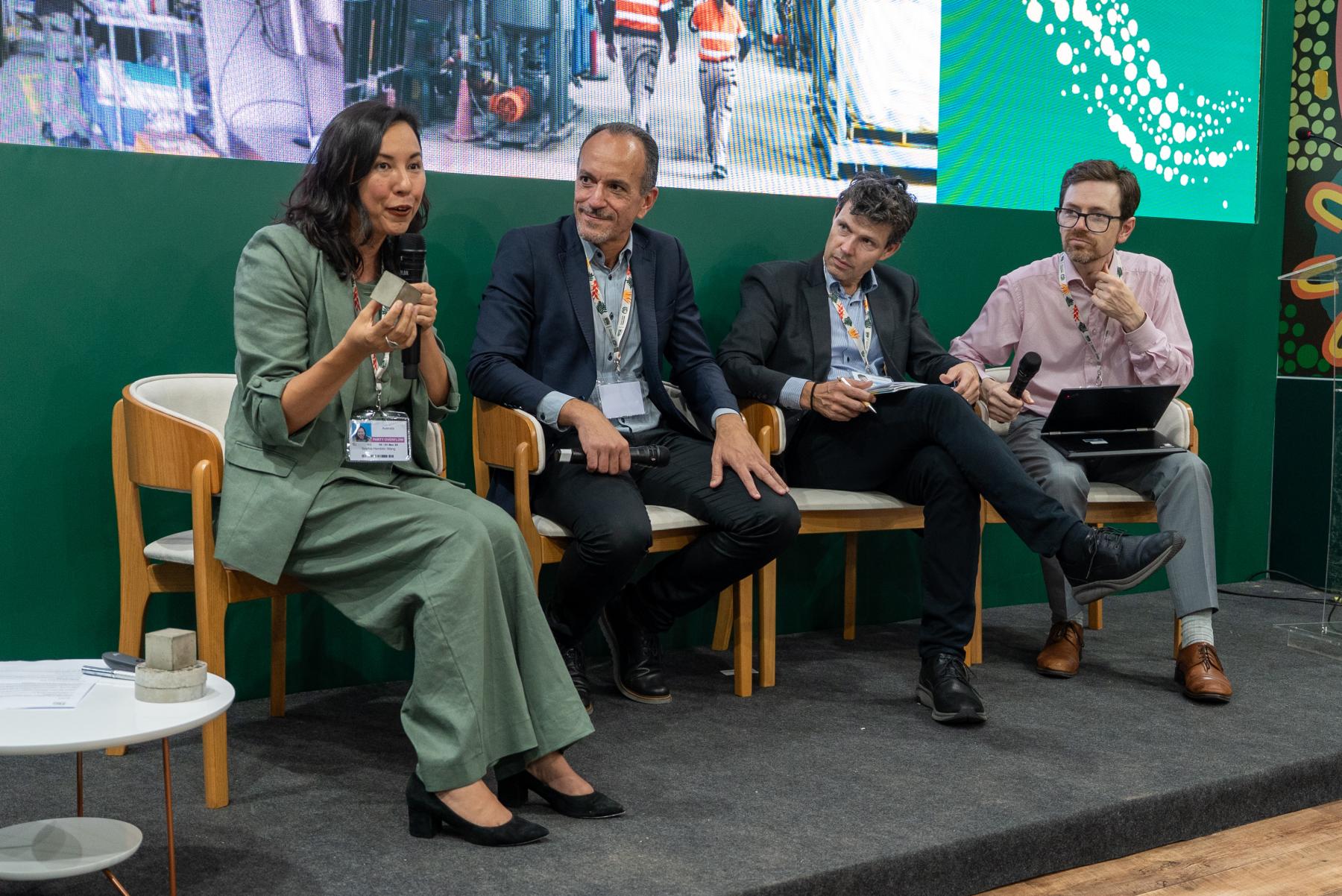
COP30 panel - image supplied by MCi Carbon
Pathways for workers from emissions-intensive industries
More than half of MCi Carbon’s current workforce is directly employed through Myrtle. Many of those workers come from coal mines, power stations, chemical plants and heavy-industry roles.
MCi Carbon has intentionally designed roles to align with the region’s existing strengths, offering local career options. Trent, who previously had a career in traditional fossil industries, joined MCi Carbon as Project and Engineering Manager. Trent says:
I spent years working as an operations manager at industrial sites across Australia, and the skills are exactly the same – operating plants, managing safety, solving process problems. The difference here is that you know the work is part of the solution. Being able to use my experience to build something that genuinely cuts emissions and aims to help make existing essential industry sustainable in the long term has been incredibly rewarding.
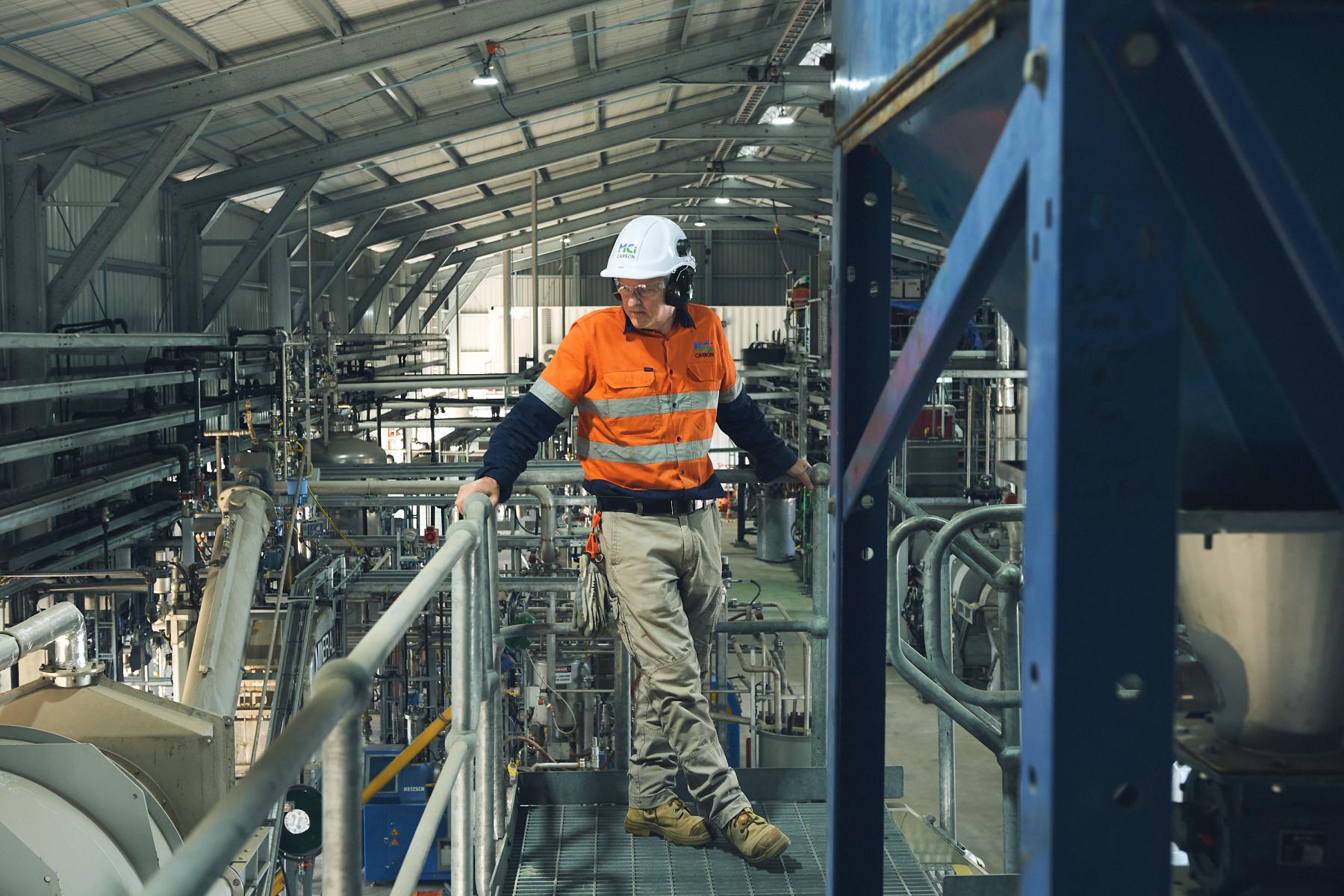
MCi Carbon Project & Engineering Manager, Trent – image supplied by MCi Carbon
Jacob's story
Another example of this transition is Jacob, who previously worked in Australia’s coal industry before making a deliberate shift into clean technology. In early 2022, he joined MCi Carbon. For Jacob, the move was a conscious decision to apply his skills where they can have the greatest impact. His skills will be contributing to the industries and solutions Australia needs to build for the future.
‘I wanted to be part of building something that has a long-term future in Australia,’ Jacob says. ‘The skills I developed in coal are still highly relevant, just now they’re being applied to technologies that help reduce emissions and create new opportunities.’
His journey reflects a broader shift across the economy, as experienced professionals from emissions‑intensive sectors bring deep operational expertise into the growing clean technology workforce.
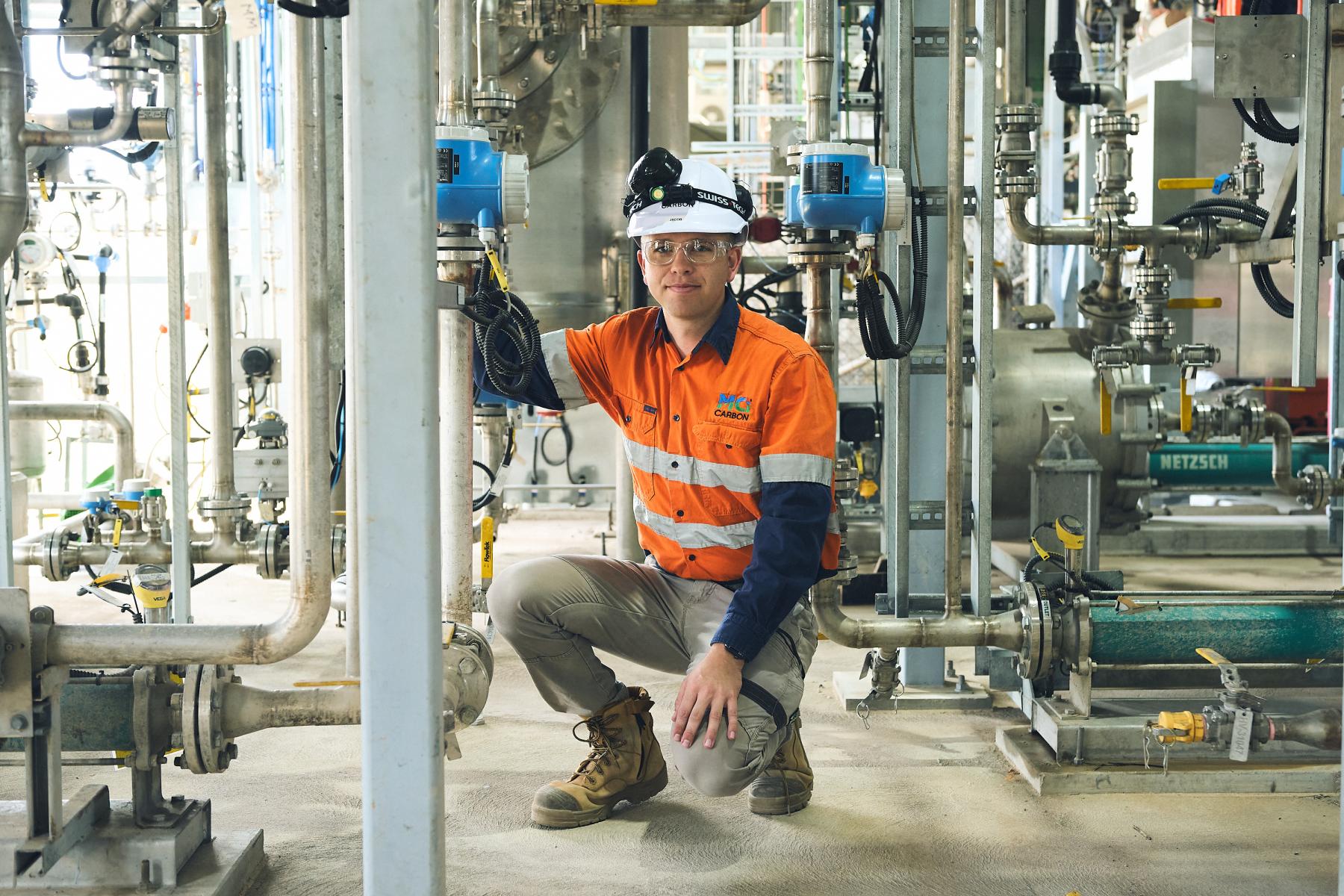
MCi Carbon Senior Engineer, Jacob – image supplied by MCi Carbon
Why scale up in the Hunter?
MCi Carbon’s expansion in Newcastle is no accident. Many of the skills held across the Hunter's workforce are the same skills needed to operate clean energy facilities like Myrtle. The region also offers a combination of strengths suited to the company’s ambitious goals, including:
- proximity to key collaborators, Orica and the University of Newcastle
- existing industrial precincts with strong infrastructure to scale
- access to major industrial emitters interested in decarbonisation
- a skilled and capable workforce
- proximity to Port of Newcastle with long-standing trade relationships.
For a company operating a world-leading clean technology that could redefine industrial decarbonisation, the Hunter is the ideal operating ground.
Global interest and strong government support
As a global leader in mineral carbonation technology, MCi Carbon has grown through government grants and private investment. In early 2025, they secured a US $20 million capital raise, matching Australian Government grants of $14.6 million from the Carbon Capture Utilisation and Storage Development Fund and $14.5 million from the Carbon Capture Technologies Program.
MCi Carbon’s first commercial customer from Europe, global refractories leader RHI Magnesita, has invested US $10 million. They will be the first customer to run a campaign at Myrtle this year. The scale-up of the technology in Europe is also supported by the $12 million Australia-Austria Industrial Decarbonisation Demonstration Partnership Program. MCi Carbon is the program's first recipient.
The company is also seeing growing interest from Japan. As industries around the world look for solutions to cut emissions without shutting down production, technologies like mineral carbonation are attracting significant attention.
A long-term mission focused on circularity and regional prosperity
MCi Carbon’s long-term mission is to embed circularity into industrial systems, allowing the Hunter to host a new, low-carbon materials industry with strong export potential.
MCi Carbon Founder and CEO Marcus Dawe says:
We’re recognised as leaders in climate technology, demonstrating how Australian innovation can accelerate progress to net zero. Together with our partners, we’re working to build a sustainable future that delivers shared prosperity.
The company’s leadership believe the transition for the Hunter is not about replacing industries, it’s about evolving the region’s capabilities. The company’s next phase includes proving the technology at commercial scale, deepening collaboration with industry partners and unlocking new markets for its low-carbon products.
'I am proud to lead an outstanding and dedicated team of people working across our three sites in Newcastle and our Canberra HQ, who are all focused on taking our technology platform to global industries.' said Mr Dawe.
For workers and communities across Australia’s industrial precincts, this represents a positive step towards a diversified, resilient economy. Locals can stay in the regions they know, use the skills they already have, and be part of an industrial future with lower emissions.